

Study shows large increases of state licensed dog breeders and brokers in Illinois, Indiana, Ohio and Pennsylvania from 2019 through 2022.
Illinois, Indiana, Ohio and Pennsylvania were part of a study focusing on increased numbers of dog breeders and brokers. All four states are known to have high concentrations of state licensed commercial dog breeders as well as established Amish and Mennonite communities.
Stop Online Puppy Mills, a national animal advocacy organization, completed the study that set out to measure increases in the number of state licensed dog breeders and brokers, tracking locations, and uncovering fluctuations between license classifications and numbers of dogs.
Commercial dog breeders and brokers selling puppies are required to be licensed in the listed states. Three of the states have license classifications that are based on the number of dogs in each licensed facility or numbers of puppies sold.
Breeders and brokers move between classifications when adding or removing dogs to their kennels.
The largest concentrations of new and established commercial breeding operations were found in areas with significant Amish and Mennonite populations.
Pennsylvania Dog Kennels
Pennsylvania saw an increase of 31% of new licensed dog 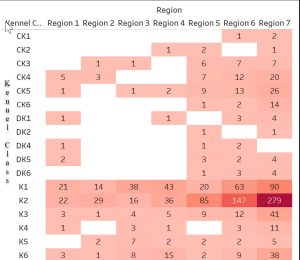 breeders and brokers. The data also shows large numbers of dogs being added to established breeding operations.
Breeders and brokers at the lowest level with 50 or fewer dogs in Pennsylvania went down by 18%, while breeders and brokers with 51-100 dogs expanded their kennels by 37%. The amount of dog breeders and brokers housing 151-250 dogs and 251-500 dogs doubled, while the largest breeders and brokers housing 500+ dogs shockingly increased 5-fold.
The state is broken down into Regions. The Regions of the state with the highest concentrations of new and existing dog breeders and brokers, are Regions 5, 6 and 7. These Regions are heavily populated by Amish and Mennonite communities and include Lancaster, Bucks, Berks, Chester, Adams, York, Lebanon counties and more.

Ohio Dog Kennels
 In Ohio there was an overall increase of 23% of new licensed high volume dog breeders and brokers.
The Ohio data also shows sizable increases and large shifts in the amount of dogs in existing kennels.
Breeders and brokers selling 40-60 puppies decreased by 14%, while breeders and brokers selling 61 to 150 puppies had an increase of 36%.
The largest increase was seen in breeders and brokers selling 151-250 puppies. This group had an increase of 67%.
The breeders and brokers selling 251 to 350 puppies increased by 52%, while the largest operations selling 350 or more puppies increased by 10%.
The increases in new breeders and brokers as well as the expansions of existing kennels were centered in Holmes County.
Holmes County, Ohio is also home to the largest Amish community in Ohio and possibly the U.S.

Indiana Dog Kennels
 The State of Indiana saw a 25% increase in new state licensed commercial dog breeders and brokers.
The majority of dog breeding operations in Indiana self report to have 100 or fewer dogs in their kennels.
Indiana has Amish and Mennonite communities with large concentrations of commercial dog breeders located both in the northern and southern parts of the state.
Lagrange County, in the northern part of the state, saw the highest concentration new breeders, while Daviess County, in the southern part of the state, came in second. Both counties are known for their large Amish and Mennonite populations and include the largest amounts of commercial dog breeding operations in the state.

Illinois Dog Kennels
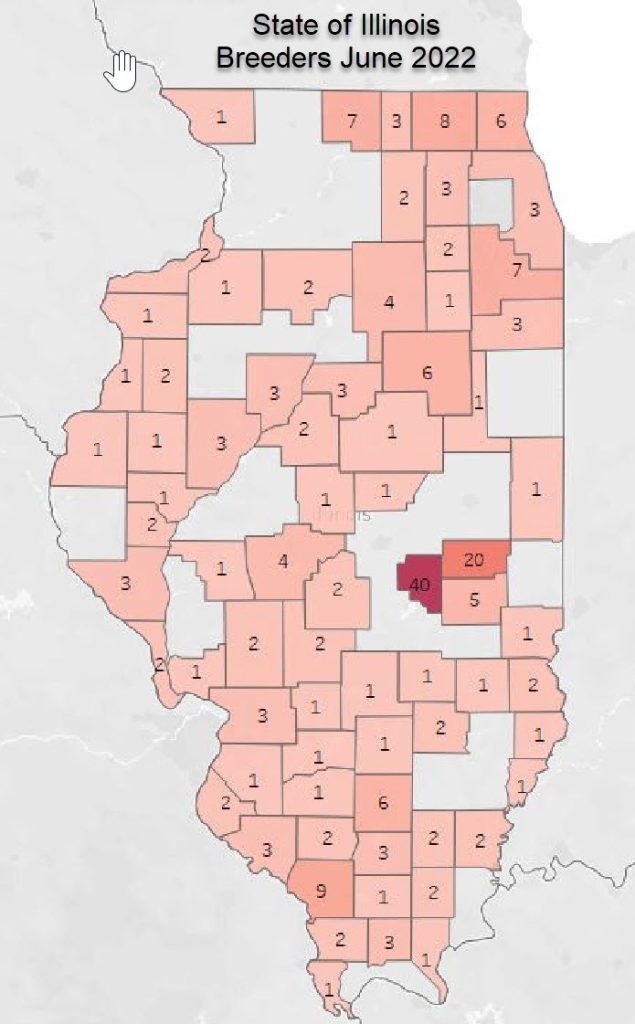 In the four fiscal years studied for Illinois, new dog breeder licensees increased by 56%.
Moultrie County, which includes Arthur, Illinois shows a 230% increase in new breeding operations.
Arthur, Illinois, is home to the largest and oldest Amish community in the state.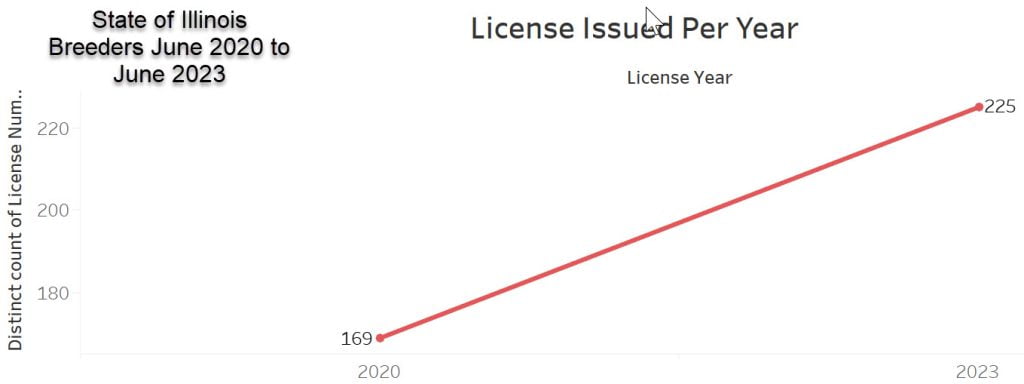
Stop Online Puppy Mills attributes the large increases in all 4 states to the easy access to puppies for sale online.
Puppy broker websites, social media accounts, and classified ad sites (that list hundreds of puppies for sale by anyone who calls themselves a breeder) add a smokescreen of legitimacy to online puppy sales and are taking a front seat to walk-in pet stores.
The growth documented in these four states shows why it is important for puppy buyers to research the breeder behind an online listing.
Before buying a puppy, verify the breeder’s identity and license status, meet the mother dog, and see where the breeder’s dogs live. A polished website or professional puppy photo does not show the conditions behind the sale.
Explore our Puppy Mill Pipeline and use our Dog Breeder License Lookup to research state-licensed commercial dog breeders before buying a puppy.
Adoption is always the best option. Shelters and rescues are overflowing with wonderful dogs and puppies of all breeds and mixes.
PUPPIES ARE ADORABLE, PUPPY MILLS ARE HORRIBLE™.