
Why You Should Not Buy a Puppy From a Picture Online
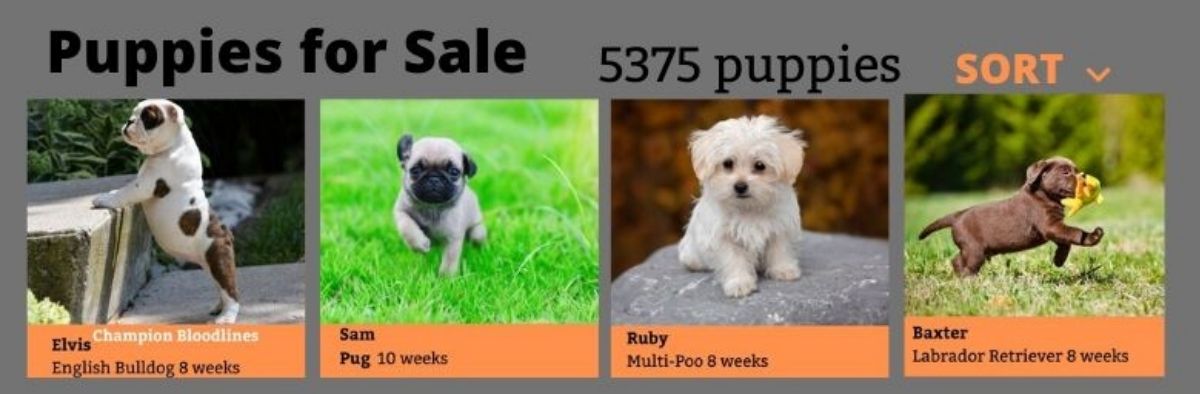
A puppy photo can be stolen, altered, or generated with AI. It also tells you almost nothing about where the puppy was born, how the mother dog lives, or whether the breeder is responsible.
Before sending a deposit for a puppy you have only seen online, learn what a photo can hide, how puppy scams work, and why meeting the puppy and mother dog in person matters.
This page explains why a puppy photo tells you almost nothing, how scammers use photos to take your money, how to check if a listing is real, and what responsible buying actually looks like. If you are thinking about buying a puppy online, read this before you send a deposit.
Why a Puppy Photo Tells You Almost Nothing
A photo shows you what a puppy looks like at one moment in time. It does not show you what you actually need to know before you spend thousands of dollars on a dog who will be in your home for the next 10 to 15 years.
From a photo, you cannot tell:
- The puppy’s personality, energy level, or temperament.
- Whether the puppy is physically healthy, or already sick with parasites, giardia, or a respiratory infection.
- Whether the puppy carries hereditary health problems — heart murmurs, epilepsy, deafness, luxating patellas, blindness — that will not show up for weeks, months, or years.
- Whether the puppy was raised in a clean home or in a kennel on wire flooring.
- Whether the puppy was socialized around people, or removed from its mother and littermates too early.
- Whether the mother dog is healthy, well cared for, and living in reasonable conditions — or being bred on every heat cycle in a puppy mill.
- Whether the puppy in the photo is actually the puppy you will receive.
Puppies should remain with their mother and littermates long enough for important early social development. Responsible breeders do not separate puppies too early. Puppies that leave their mother too early often show behavior problems for life — aggression, fear, anxiety, extreme shyness, or submission. None of that is visible in a photo of a cute puppy at eight weeks old.
How Scammers Use Photos to Take Your Money
Puppy scam sites are everywhere. Some take your money and never send a puppy at all. Others send a sick puppy from a puppy mill that looks nothing like the one in the listing. The starting material for almost every scam is a photo, and scammers have several ways of producing photos that look convincing.
Stolen Photos From Real Breeders and Rescues
The most common scam is simply taking photos from a legitimate breeder’s website, a rescue group, or social media and reposting them as the scammer’s own. The puppy in the photo is real, but the person selling it does not have a puppy at all. Once you send a deposit, the “breeder” disappears or keeps asking for more money for “shipping,” “insurance,” or a “special crate.”
AI-Generated Puppy Photos
AI image tools can now generate photorealistic puppies that do not exist. These photos often look a little too perfect, with unnaturally symmetrical features, strange-looking paws, or backgrounds that do not quite line up. Scammers use AI-generated photos because they cannot be reverse-image-searched back to a real source. If a listing has multiple photos that all look slightly airbrushed or unnaturally soft, be suspicious.
Stock Photos
Some scam sites pull puppy photos from stock image libraries. If the exact same puppy photo appears on multiple unrelated websites, it is almost certainly a stock image being used to fake a listing.
Photoshopped and Filtered Photos
Even when the puppy in the photo is real, commercial breeders and brokers often use filters and editing to make the puppy’s coat look fluffier, their eyes bigger, and the background cleaner than the kennel actually is. The puppy that arrives at your door may look noticeably different from the listing.
How to Check if a Puppy Photo Is Real
You can run the photos through two free checks:
- Google Images reverse search. Right-click the listing photo, copy the image, then go to images.google.com and paste it in. If the same photo appears on other breeder sites, rescue pages, or stock image sites, the listing is a scam.
- TinEye (tineye.com). A free reverse image search tool that often catches what Google Images does not. Paste the listing photo and see where else it has appeared.
If the photos pass both searches, that still does not prove the puppy is real — AI-generated images will not show up on either tool. It just eliminates the most common scam. The only way to know for sure that the puppy exists and is healthy is to see the puppy and meet the mother dog in person.
The Deposit-and-Disappear Scam
The most common online puppy scam follows the same pattern every time:
- Buyer sees a photo of an adorable puppy at a price that is slightly below market.
- Seller is responsive, friendly, and sends more photos on request — all of the same puppy, from similar angles.
- Seller asks for a non-refundable deposit by wire transfer, Zelle, Venmo, gift card, or cryptocurrency — never a credit card or PayPal Goods and Services, because those can be reversed.
- Once the deposit is paid, new fees appear. “Special climate-controlled crate.” “Shipping insurance.” “Vaccination certificate.” “Flight nanny fee.” Each one requires another payment.
- Eventually the seller stops responding, or the “puppy” arrives and looks nothing like the photo — sick, older than promised, or a different breed entirely.
If any seller asks for payment by wire transfer, gift card, or cryptocurrency, stop the conversation immediately. Those are red flags. No responsible breeder operates that way.
Why Responsible Breeders Do Not Sell Puppies by Photo
A responsible breeder should be willing to identify themselves, answer questions about the puppy and parents, and allow buyers to visit the property and meet the mother dog. A photo should never be the main basis for choosing a breeder or sending money.
For a full checklist, read our How to Find a Responsible Dog Breeder guide.
Commercial breeders and online puppy brokers, on the other hand, are set up to sell as many puppies as possible to as many buyers as possible, as quickly as possible. They ship. They meet you in parking lots. They use flight nannies. They accept deposits over the internet from buyers they have never spoken to. That is not how a responsible breeder operates.
If you want to know what you are actually looking at when you see an online puppy listing, it helps to understand what commercial kennels look like inside. USDA commercial dog breeders are licensed to sell puppies wholesale and to direct-ship to buyers. Their facilities are where most of the puppies sold online are actually born.
What to Do Instead
If you want a healthy puppy from a breeder who cares about their dogs, skip the online photo-based listings entirely and take these steps:
- Read our responsible breeder guide so you know what a good breeder looks like before you start looking.
- Search for breed clubs and parent-breed organizations. They maintain lists of members who follow a code of ethics.
- Ask to visit the breeder’s home or kennel. If you cannot visit, do not buy. Do not buy a puppy from a photo.
- Meet the mother dog in person. Use our full checklist of what to look for at the breeder’s property.
- Consider adoption. Breed-specific rescues and local shelters regularly have puppies and young dogs, including purebreds and popular doodle mixes.
Bottom Line
A cute photo is the cheapest thing in the online puppy business. Scammers can steal one in thirty seconds, and AI can generate one in less time than that. What a photo cannot do is tell you whether the puppy is real, whether it is healthy, whether it was raised well, or whether the mother dog is being bred to death in a kennel. The only way to know any of that is to visit in person.
Never pay for a puppy you have not seen in person. Never send money by wire transfer, gift card, or cryptocurrency to a seller you have not met. And if you believe a breeder or broker is running a puppy mill or scam operation, please Report a Puppy Mill so we can add the details to our watchdog database and warn other buyers before they send a deposit.