

Pennsylvania Commercial Dog Breeding Data
Pennsylvania stands as a cornerstone of the American commercial dog breeding industry, often dubbed the “Puppy Mill Capital of the East,” with Lancaster County serving as its epicenter. 
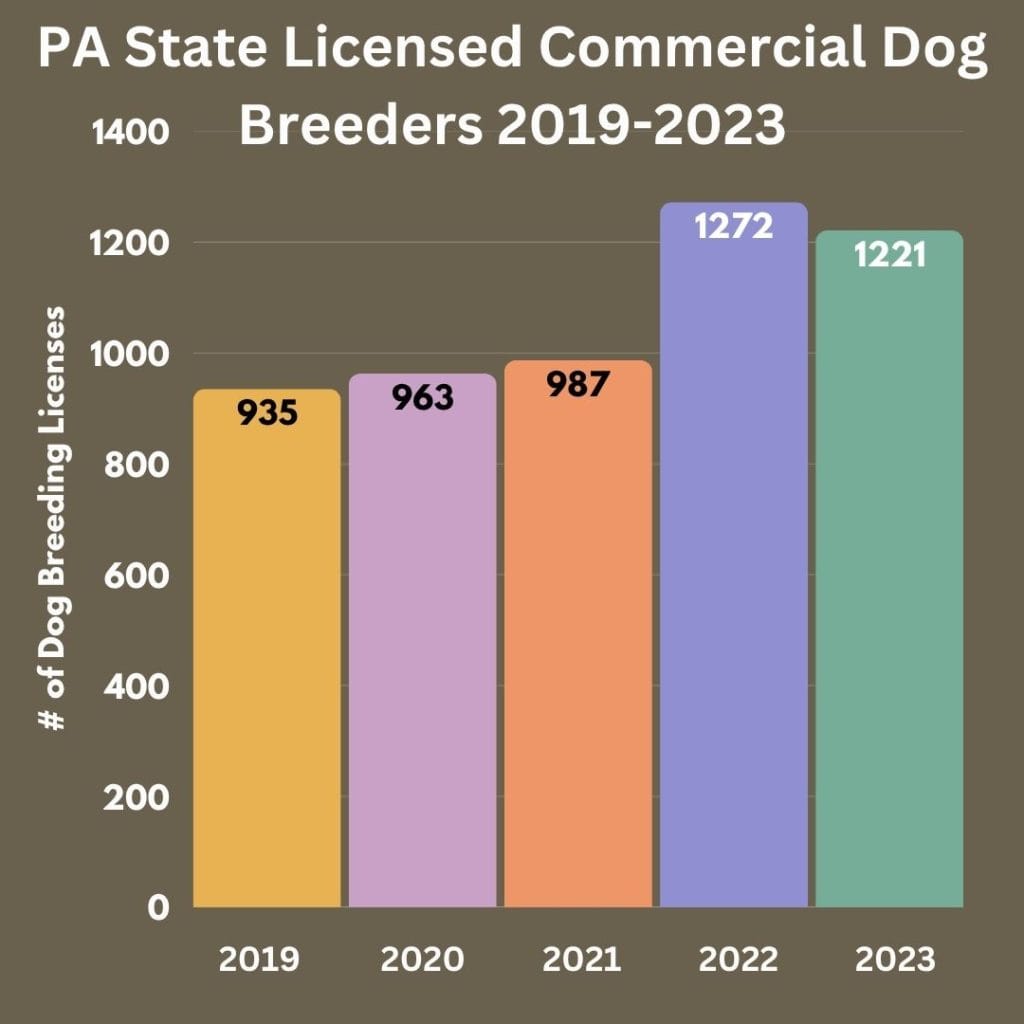
PA State Licensed Commercial Dog Breeders 2019-2023 Bar Chart
This bar chart shows the steady growth in Pennsylvania’s state-licensed commercial dog breeders from 2019 to 2023, with the number of licenses rising from 935 in 2019 to a peak of 1,272 in 2022, before a slight dip to 1,221 in 2023. Lancaster County, Pennsylvania, serves as the commercial dog breeding epicenter for the state. These breeders utilize high-volume internet platforms like Lancaster Puppies, Greenfield Puppies, and Infinity Pups to list their dogs. These online puppy sellers facilitate anonymous, nationwide sales and shipping, allowing consumers to purchase puppies without ever visiting the breeders.
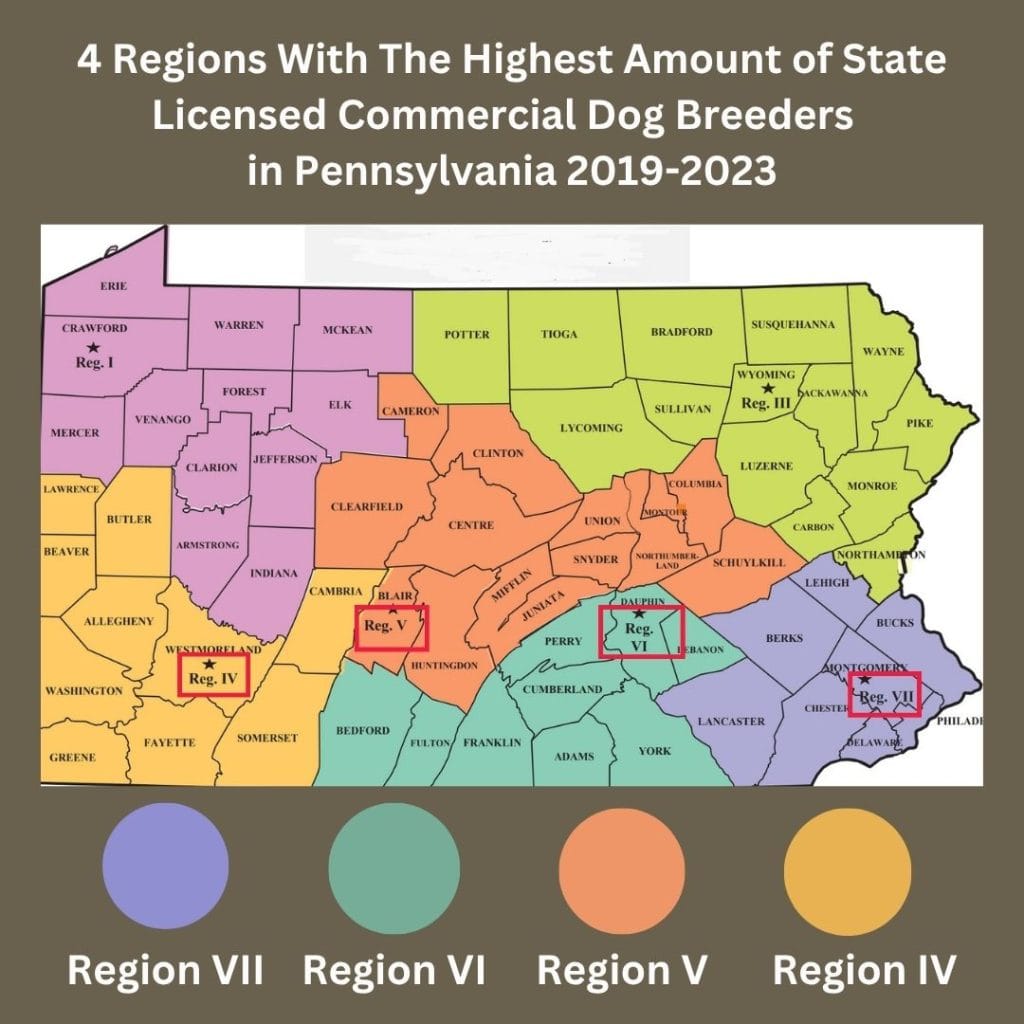
4 Regions with the Highest Amount of State Licensed Commercial Dog Breeders in Pennsylvania 2019-2023 Map
This map visually identifies Pennsylvania’s four regions with the highest concentrations of state-licensed commercial dog breeders during 2019-2023. Lancaster County’s placement in Region VI emphasizes its status as the nation’s puppy mill capital, with hundreds of facilities feeding into online puppy sales directories like Lancaster Puppies, Greenfield Puppies, and Infinity Pups, which connect breeders to distant buyers through virtual listings and the shipping of puppies, contributes to high volume breeding evading direct scrutiny of facility and animal conditions.
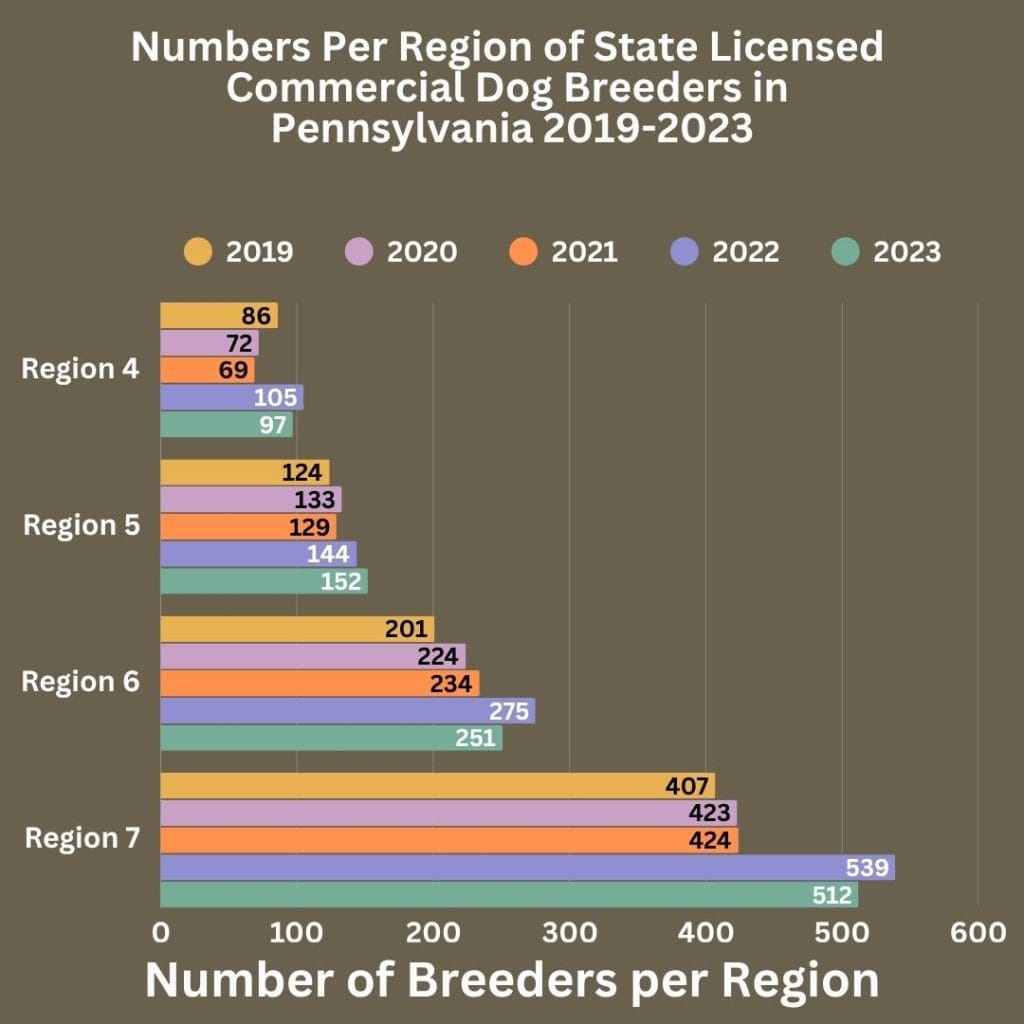
Numbers Per Region of State Licensed Commercial Dog Breeders in Pennsylvania 2019-2023 Stacked Bar Chart
The bar chart illustrates the distribution and year-over-year fluctuations of state-licensed commercial dog breeders across Pennsylvania. Region 6’s substantial share highlights Lancaster County’s critical role in sustaining Pennsylvania’s commercial dog breeding industry, where rural, community-based kennels—often in Amish areas—house dozens of breeding dogs that supply the majority of listings on local online puppy sales sites like Greenfield Puppies and Lancaster Puppies. These platforms exploit the region by marketing “family-raised” puppies.
How Pennsylvania Breeders Sell Online
Most Pennsylvania commercial breeders do not operate their own direct-to-consumer websites. Instead, they reach buyers through broker websites, classifieds platforms, and social media accounts. When you see a puppy advertised online as being from Pennsylvania, the listing is often posted by an intermediary rather than by the breeder themselves.
Common sales channels include:
- A broker that contracts with a dog breeder and resells them under its own brand, often with a different name and photos than the original breeder uses
- A classifieds site where the breeder pays to list puppies alongside hundreds of other sellers from across the country
- A doodle-specific marketplace or designer-breed platform that aggregates litters from many breeders
- A Facebook group, Craigslist ad, or Instagram account run by the breeder, a family member, or a middleman
In many cases the buyer never learns the specific name or location of the breeder until after the sale is complete. Some broker websites do not disclose the breeder at all — even after purchase, the buyer may only receive a first name and a general region. This opacity is intentional: it keeps the commercial nature of the operation hidden from buyers who might otherwise walk away. The internet is the perfect storm.
USDA Licensing in Pennsylvania: What It Means and What It Doesn’t
A USDA license in Pennsylvania — or any other state — is not a mark of quality. It is a minimum-standards license issued by the USDA’s Animal and Plant Health Inspection Service (APHIS) under the federal Animal Welfare Act (AWA). The AWA sets the legal floor for how dogs can be housed and cared for in commercial settings. That floor is low even inhumane.
Under current federal standards, a USDA-licensed breeder can legally:
- House a breeding dog in a cage only six inches longer than the dog in every direction
- Use wire flooring that the dog stands and sleeps on 24 hours a day
- Breed a female dog on every heat cycle until she is physically no longer able to produce
- Provide minimal veterinary care
- Offer no required exercise outside the cage
At the federal level, Pennsylvania breeders who sell puppies wholesale or sight-unseen to the public across state lines must be licensed by the U.S. Department of Agriculture’s APHIS office under the Animal Welfare Act. Federal standards are a legal minimum and are not a mark of quality. You can look up any USDA-licensed breeder in Pennsylvania and review their inspection history in the USDA-APHIS public inspection database.
At the state level, Pennsylvania’s Dog Law and the commercial kennel provisions within it add additional licensing. The Pennsylvania Bureau of Dog Law Enforcement issues state kennel licenses and conducts inspections. Being licensed at either level does not mean a breeder is humane — it means the breeder is legally permitted to operate.
What Puppy Buyers Searching in Pennsylvania Should Watch For
If you are searching for a puppy from a Pennsylvania breeder, the most important step you can take is to visit the breeder in person and meet the mother dog before you buy. Responsible breeders welcome visits. Commercial breeders and brokers almost always discourage or refuse them — because the kennel conditions would tell the whole story.
When researching a Pennsylvania breeder, look for:
- A physical address, not just a town or region
- A phone number where the breeder — not a middleman — answers
- Photos of the actual kennel and the actual parent dogs, not stock images or staged puppy photos
- The ability to meet the mother dog at the property where she lives
- Veterinary records for the puppy and health testing records for both parents
- Breed-appropriate health screening: OFA hips and elbows for larger breeds, cardiac and eye exams where applicable, and DNA testing for breed-specific genetic conditions
If the listing or website does not make these details available, ask directly. If the seller refuses, evades, or only offers to ship the puppy to you, that is a strong sign you are not dealing with a responsible breeder.
Red Flags in Online Listings
Commercial breeding operations and the brokers that sell for them share a common set of warning signs. If you see any of these in a listing or in a conversation with a seller, stop and reconsider:
- Multiple breeds or multiple litters available year-round
- Puppies available at 6 weeks old or younger
- No option to visit the breeder in person
- Shipping offered as the default delivery method, often at an additional flat fee
- Payment requested through wire transfer, gift cards, Zelle, Venmo, or CashApp with no refund policy
- A generic website with stock puppy photos and no specific breeder information
- The seller cannot or will not give a physical address and phone number for the kennel
- The same phone number or kennel listed on multiple broker sites under different names
- Heavy use of marketing phrases like “champion bloodlines,” “health guaranteed,” or “USDA inspected” with no documentation to back them up
Many commercial operations list through the same small group of broker platforms.
How to Report a Suspected Puppy Mill in Pennsylvania
If you believe a Pennsylvania breeder is operating a puppy mill or you have purchased a sick puppy from one, you have several options for reporting.
- USDA-APHIS — for federally licensed breeders. File a complaint at aphis.usda.gov or call 1-844-820-2234.
- Pennsylvania Bureau of Dog Law Enforcement — for state-licensed kennel operators and commercial kennels. Contact the Bureau through the Pennsylvania Department of Agriculture at agriculture.pa.gov.
- Your local county animal control, humane society, or state police — for cases involving animal cruelty, neglect, or unsafe conditions.
- Stop Online Puppy Mills — report the breeder, broker, or online listing through our Report a Puppy Mill
Keep every record you have: the listing, your receipt, text messages, emails, and veterinary records for the puppy. These will be critical if you file a complaint or pursue a refund under a consumer protection or puppy lemon law.
Final Word for Pennsylvania Puppy Buyers
Pennsylvania has a significant commercial dog breeding industry, and many of its breeders sell through online brokers and classifieds platforms rather than direct to the public. A USDA or state license is not a guarantee of quality, and an attractive website or listing does not mean the puppies come from a humane breeder. The single best protection for a buyer is to visit the breeder in person, meet the mother dog, and walk away from any seller who cannot or will not let you do that.
If you are unsure about a Pennsylvania breeder you are considering, contact us before you pay a deposit.
Why This Matters
Understanding how and where puppies sold online are bred helps prospective dog owners make more ethical and informed choices. High-volume dog breeding operations—while legal—often prioritize profit over animal welfare. Licensing alone does not guarantee humane conditions.
Stop Online Puppy Mills, encourages people to use this data to:
Recognize the scale of the commercial dog breeding industry in Pennsylvania
Identify potential red flags when shopping for a puppy
What You Can Do
Help stop the cycle.
Rescue your next dog. Choose adoption from local shelters or rescues instead of purchasing puppies online or from pet stores. Shelters and rescues are overflowing with amazing dogs and puppies.
Report concerns. If you suspect unethical breeding practices or encounter misleading online puppy listings, report them.
Share this page. Spread awareness about the realities of commercial dog breeding in Pennsylvania and beyond.