

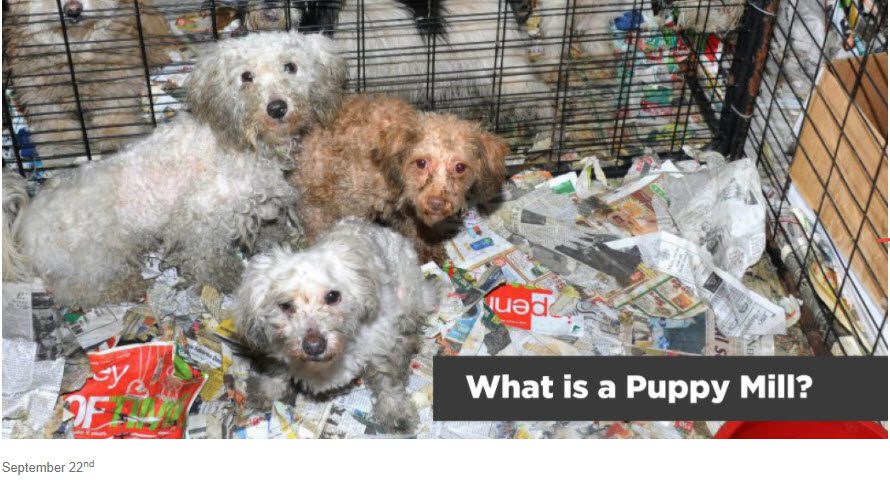
In Part 1 of this BISSELL Pet Foundation interview, Cathy Bissell talks with Janie Jenkins, founder of Stop Online Puppy Mills, about puppy mills, commercial dog breeding, and how the online sale of puppies has helped hide the conditions breeding dogs may live in. The conversation also explores how puppy mills affect shelters, rescues, and the families who purchase puppies without ever seeing where the dogs were bred.
_____________________________________________________________________________________________
Cathy Bissell Interviews Janie Jenkins About Puppy Mills
Cathy: How did you first learn about puppy mills and what was your experience like?
Janie: I learned about puppy mills in 2008 and was outraged. I could not believe they could be legal and that no one knew about them. I had to take action.
Cathy: Why would someone start a puppy mill to begin with?
Janie: For the high volume breeders, the bottom line is money. Sadly, it’s a business.
Cathy: How do puppy mills affect the homeless pet population?
Janie: The poor breeding practices of high volume breeders or puppy mills absolutely affect rescues and shelters. People give up pets that have health and behavioral problems to shelters and rescues all the time. Think about it, the puppies are taken away from their moms very early and are shipped across the country. They are not properly socialized by their mothers. They don’t know how to be a dog. Mother dogs play a very important role in puppies’ lives. They teach them how to be dogs. So many of these puppies become dogs with anxiety or separation anxiety. The genetic defects and illnesses usually don’t show up for years.
People surrender their dogs because they can’t afford medical care or don’t want to deal with dogs with behavioral issues. Puppy mills breed without regard to the health of the puppies. I was involved in a rescue where the mother, a Cocker Spaniel, was blind. She had birthed a litter a week before and all of the puppies were sold online. Those puppies most likely carry that blind gene. The people who bought the puppies have no idea because the puppies were shipped for Christmas and they never met the mother dog. It’s tragic all the way around.
Cathy: Where are puppy mills commonly located?
Janie: Puppy mills can be found across the United States. Some states have historically had particularly high concentrations of commercial dog breeders, including Missouri, Pennsylvania, Ohio, Illinois, Indiana, and parts of the Midwest. Online puppy sales have also made it easier for breeders in many states to reach buyers nationwide.
Continue the BISSELL Pet Foundation interview series to learn more about what life can be like for dogs used for commercial breeding and why consumer education matters.
Continue reading: BISSELL Pet Foundation Puppy Mill Interview – Part 2. To learn more about puppy mills and to help us educate others to help end them, follow Stop Online Puppy Mills on Facebook and Instagram.