

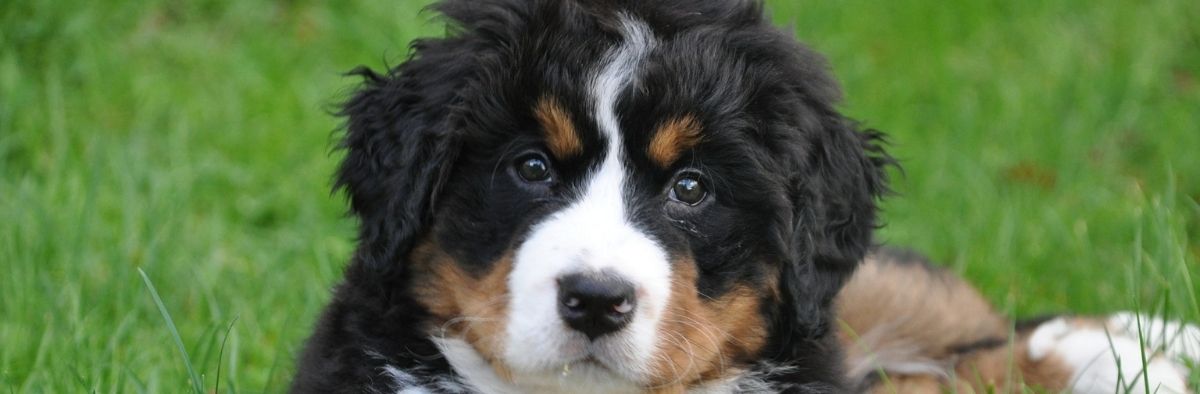
Bernedoodle & Mini Bernedoodle Puppies: What to Know Before You Buy
The Bernedoodle is a cross between a Bernese Mountain Dog and a Poodle. The tri-color markings of the Bernese, combined with a Poodle coat that is marketed as low-shedding, have made Bernedoodles one of the most in-demand designer breeds in the United States. Mini Bernedoodles — bred using a Miniature or Toy Poodle — are even more popular because many buyers want a smaller dog.
That high demand and those high prices have made Bernedoodles a major focus for commercial breeders and online puppy brokers. Before you buy a Bernedoodle or Mini Bernedoodle puppy online, it is worth understanding how these dogs are actually produced, what health issues to watch for, and which red flags point to a puppy mill operation rather than a responsible breeder.
Why Bernedoodles Are a Puppy Mill Target
Bernedoodles and Mini Bernedoodles have become a top breed for commercial production for several reasons:
- High demand. Tri-color Bernedoodles look like a teddy bear version of a Bernese Mountain Dog, and Mini Bernedoodles appeal to buyers who want that look in a smaller package.
- High price points. Standard Bernedoodle puppies typically sell for $3,000 to $4,000, and “rare” colors or Mini/Tiny sizes can push prices higher.
- “Hybrid vigor” marketing. Commercial breeders often claim that mixing two breeds automatically produces healthier dogs. That is a marketing claim, not a veterinary fact.
- “Hypoallergenic” marketing. No dog is truly hypoallergenic. The Poodle parent reduces shedding in some Bernedoodles, but coat type varies from litter to litter, and some Bernedoodles shed significantly.
- Online sales channels. Bernedoodles sell through online puppy brokers, classifieds, and doodle-specific networks with slick websites that make commercial breeding look like a family hobby.
How Mini Bernedoodles Are Actually Produced
Most buyers who see a Mini Bernedoodle listing online picture the parents meeting, mating, and producing a litter naturally. For standard-sized Bernedoodles, that can happen. For Mini Bernedoodles, it almost always cannot.
A Bernese Mountain Dog female typically weighs 70 to 110 pounds. A Miniature or Toy Poodle male typically weighs 10 to 15 pounds. Natural breeding between dogs of that size difference is physically impossible. To produce Mini Bernedoodle litters, commercial breeders almost always use artificial insemination, collecting semen from the small Poodle male and inseminating the much larger female.
This is an industrial breeding practice, not something that happens in a family home. It is one reason Mini Bernedoodles and other Mini doodles are so tightly associated with high-volume commercial breeding operations. When you see a Mini Bernedoodle listing, it is fair to assume the puppy came from a facility that produces multiple litters per year through planned artificial insemination cycles.
Health Issues Bernedoodles Can Inherit
Because Bernedoodles are a mix of two breeds, they can inherit health problems from either parent. In commercial breeding operations, where breeding dogs are not health-tested and genetic screening is skipped to save cost, those problems show up more often — and buyers pay the veterinary bills.
Hip and Elbow Dysplasia
Both Bernese Mountain Dogs and Poodles are prone to hip and elbow dysplasia, malformations of the joint that lead to arthritis and, in severe cases, surgery. Responsible breeders screen both parents through OFA or PennHIP before breeding. Commercial breeders typically do not.
Cancer
Bernese Mountain Dogs have one of the highest cancer rates of any breed, including histiocytic sarcoma, lymphoma, and mast cell tumors. Because Bernedoodles carry that genetic load, cancer risk can be significantly higher than in purebred Poodles. No breeder can guarantee a cancer-free dog, but a responsible breeder will be honest about this risk. Commercial breeders typically will not bring it up at all.
Bloat (Gastric Dilatation-Volvulus)
Large, deep-chested dogs like Bernese Mountain Dogs and Standard Poodles are at higher risk for bloat, a sudden and life-threatening condition where the stomach twists. Bernedoodle owners should be aware of the symptoms and the emergency nature of this condition.
Eye Conditions
Progressive retinal atrophy (PRA) and cataracts can occur in both parent breeds. A CAER (Canine Eye Registration Foundation) exam on both parents before breeding is standard practice for a responsible breeder.
Skin and Coat Issues
Bernedoodles can have curly, wavy, or straight coats, and the care requirements vary widely. Some Bernedoodles have skin allergies, hot spots, or recurring ear infections, especially if the coat is not properly maintained.
Shorter Lifespan Than Expected
Bernese Mountain Dogs have an unusually short lifespan of 7 to 8 years on average. Standard Poodles live 12 to 15 years. Bernedoodle lifespans tend to fall somewhere in between, often around 10 to 12 years, but cancer and joint disease can shorten that considerably.
Bernedoodle Online Scams to Watch For
Bernedoodles and Mini Bernedoodles are heavily marketed online. These are the most common scam patterns to watch for:
“Rare Color” and “Tiny” Pricing Scams
Standard tri-color Bernedoodles are already in high demand. Commercial breeders push prices even higher by marketing “phantom,” “sable,” “merle,” or “tiny” Bernedoodles as rare. Merle in particular can be associated with serious health problems, especially when two merle-carrying dogs are bred together, which can produce deaf and blind puppies. A higher price tag does not mean a healthier dog — often the opposite.
F1, F1b, F2, Multigen Confusion
Commercial breeders use generation labels (F1, F1b, F2, Multigen) as marketing rather than genetics. The label tells you the cross type, not the health of the puppy or the coat outcome. Coat type and shedding level can vary significantly even within a single F1b litter.
Deposit Fraud and Fake Websites
Because Bernedoodle demand is high, scammers create fake breeder websites with stolen photos, take a non-refundable deposit, and then disappear or keep demanding more money for “shipping insurance,” “special crate fees,” or “vaccinations.” If a seller asks for payment by wire transfer, gift card, or cryptocurrency, it is almost always a scam.
Stolen Photos from Other Breeders
Some listings use photos taken from legitimate breeders or rescue groups. A reverse image search on the puppy photos can reveal whether the image has appeared elsewhere online.
Red Flags in Bernedoodle Listings
If you are looking at a Bernedoodle listing online, watch for these warning signs of a puppy mill or broker operation:
- The seller will not let you visit the property or meet the mother dog.
- The mother and father are not on site, or the seller says the stud “lives with another family.”
- Multiple litters are available at the same time, in multiple colors and sizes.
- The website shows stock photos or the same puppy photos across multiple listings.
- The seller pushes shipping, flight nanny, or delivery instead of in-person pickup.
- The seller offers credit or financing options.
- The breeder cannot produce OFA, PennHIP, or CAER certificates for both parents.
- The contract does not include a health guarantee.
- The seller claims to be USDA licensed but cannot give you a license number.
- Prices are marked up significantly for “rare” colors or “tiny” sizes without a medical or genetic reason.
How to Find a Responsible Bernedoodle Breeder
A responsible breeder behaves very differently from a commercial breeder or online broker. You can read our full responsible breeder guide for details.
A responsible Bernedoodle or Mini Bernedoodle breeder will:
- Let you visit their home or kennel, meet the mother dog, and see where the puppies are raised.
- Show you health test results (OFA hips and elbows, CAER eye exam, cardiac exam) for both parents, not just say the parents are “vet-checked.”
- Produce only one or two litters per year, not continuous rolling litters.
- Be transparent about cancer risk in the Bernese line and about joint issues in both parent breeds.
- Have a waiting list rather than always-available puppies.
- Ask you questions about your home, your activity level, and whether you have kids or other pets.
- Provide a written contract with a health guarantee and a clause that requires you to return the dog to them if you cannot keep it.
- Discourage, not encourage, shipping a young puppy sight-unseen.
If a Bernedoodle breeder refuses to let you meet the mother dog or visit in person, that is one of the most important warning signs you will see.
Bernedoodle Rescues and Breed Resources
If you are set on a Bernedoodle or Mini Bernedoodle, rescue is always an option first. Breed-specific and doodle-specific rescues regularly have Bernedoodles available, including Mini Bernedoodles surrendered because their owners did not expect the energy level, coat maintenance, or size.
IDOG Rescue — A national doodle rescue that takes in Bernedoodles, Goldendoodles, Labradoodles, and other doodle mixes surrendered by owners or pulled from shelters.
Doodle Rock Rescue — A Texas-based doodle rescue that pulls doodles of all sizes, including Bernedoodles, from shelters and commercial breeding operations.
Bernese Auction Rescue Coalition (BARC) — Focuses on purebred Bernese Mountain Dogs but also takes in Bernedoodles pulled from commercial breeder auctions.
Local shelters and all-breed rescues — Many Bernedoodles end up in local shelters as owners underestimate the time, grooming, and cost involved. Petfinder and local humane societies are good first stops.
Finally
Bernedoodles and Mini Bernedoodles are lovely dogs, but they are also one of the most aggressively produced designer breeds in the commercial dog breeding industry. The Mini versions in particular are almost always produced through artificial insemination in facilities that run on high-volume production schedules — a reality most buyers never see in the photos.
If you are going to buy a Bernedoodle, take the time to meet the breeder, meet the mother dog, see the property, and verify health testing on both parents. If you are adopting, there are Bernedoodles in rescue right now waiting for a home. And if you believe a breeder or broker is running a puppy mill operation, please Report a Puppy Mill or contact us.